"The Magician – Mercury and the Moment I Was Seen" takes you on a journey of self-discovery and transformation. Through the symbolic lens of Mercury, it uncovers hidden truths and illuminates the path to personal enlightenment. A powerful tale of unseen moments that shape who we truly are.
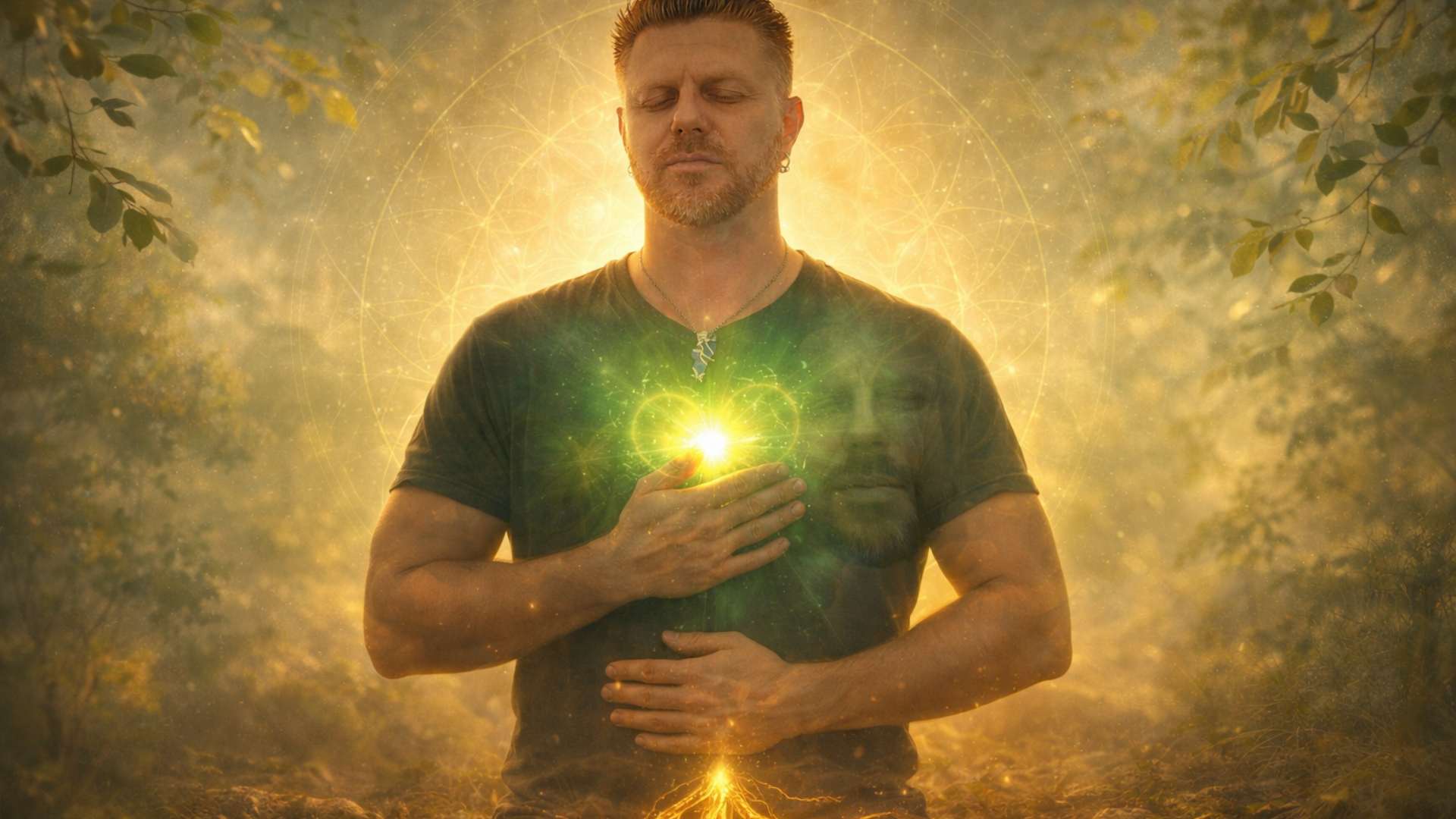
The Heart Chakra – Opening Without Collapsing
There was a woman I’d been seeing who once said to me: “I can feel how much you love me. But sometimes I wonder if you’re protecting yourself from needing me.”
She wasn’t wrong.
I’d spent years learning how to open my heart—how to feel, how to express, how to let love move through me without shutting down. I’ve done the work. I can name emotions. When intensity rises, I stay present. I hold space for grief, joy, anger, and tenderness. This practice keeps me grounded, honest, and compassionate with myself and others, even in hard moments.
But there’s a difference between opening your heart and letting someone matter to you.
And that difference is where the real work lives.
This week, we’re exploring the Heart Chakra—Anahata—the bridge between the lower chakras (survival, power, identity) and the upper chakras (truth, vision, connection to source). This is where love meets vulnerability. Where devotion meets fear. Where the Lover learns that true opening requires both courage and discernment.
The Heart Chakra: Anahata
In yogic philosophy, Anahata means “unstruck” or “unhurt”—the sound that exists without two things striking together. It’s the vibration of pure being, untouched by the wounds of the world.
Located at the center of the chest, Anahata governs:
- Love and compassion
- Connection and empathy
- Grief and forgiveness
- The capacity to give and receive
- The balance between self and other
When Anahata is balanced, we experience:
- Open-heartedness without martyrdom
- Compassion without over-functioning
- Boundaries that preserve connection
- The ability to love without losing ourselves
When blocked or wounded, we experience:
- Heart armor and emotional numbness
- People-pleasing and self-abandonment
- Fear of intimacy or smothering closeness
- Inability to forgive or let go
The element of the Heart Chakra is air—light, spacious, free-moving. But air without container becomes scattered. The work of the heart is learning to stay open while remaining grounded.
The Paradox: Opening vs. Surrendering
Here’s what I’ve learned the hard way:
You can be emotionally available without being emotionally vulnerable.
I listen deeply and hold space without judgement. With presence and compassion, I witness pain and stay grounded. When emotions arise, I name my feelings clearly, cleanly, and with honesty..
But that’s not the same as letting someone change me.
True vulnerability isn’t just sharing your emotions—it’s letting another person’s presence reorganize your inner world.
It’s the difference between:
- Saying “I love you” and letting yourself need someone
- Being present and being affected
- Holding space and being moved
For years, I confused emotional literacy with emotional openness.
I could talk about my feelings. I just didn’t always let them land in my body in real time with another person watching.
The Story: When Love Asked for Containment
A few years ago, I was in a relationship where I thought I was being the “evolved partner.”
I was open. Communicative. Willing to feel. I didn’t shut down or disappear. Instead, I stayed present. I didn’t ghost anyone. I showed up, listened, and spoke honestly. Even when it was uncomfortable, I leaned into the hard conversations.
But what my partner began to express was something I didn’t expect:
“You’re so open that sometimes I feel like I’m drowning. I need you to hold something back. I need to feel like there’s a structure here.”
At first, I was confused. Wasn’t openness the goal?
But what she was naming was real: My openness had become boundaryless.
I was so committed to “not being emotionally unavailable” that I swung to the opposite extreme—over-sharing, over-processing, over-feeling in ways that didn’t serve connection.
I thought I was being vulnerable. But I was actually being uncontained.
And that lack of containment didn’t create safety—it created anxiety.
The Lesson: The Lover Needs the Warrior
This is where integration becomes essential.
The Lover without the Warrior becomes:
- Boundaryless
- Emotionally porous
- Unable to hold his own center
- Dependent on external validation
The Warrior without the Lover becomes:
- Rigid
- Emotionally defended
- Unable to be moved
- Isolated in his competence
The medicine is learning to hold both.
Be open-hearted, but stay discerning.
To be vulnerable AND grounded.
To love deeply AND maintain sovereignty.
The heart chakra sits between the solar plexus (power) and the throat (truth). It needs both to function.
Without the Warrior’s container, the Lover collapses.
Without the Lover’s openness, the Warrior becomes stone.
My Current Edge: Letting Someone Matter
Right now, my edge isn’t about being more open.
It’s about letting someone matter enough that their absence creates a felt sense of loss.
Not codependence. Not need disguised as love.
But genuine capacity to long for someone.
I’ve spent years protecting myself from that. Not consciously. But the pattern is clear:
II can love deeply. Being present comes naturally to me. Caring is who I am.
But I’ve often kept a part of myself unreachable—just in case.
I’m keeping this as a backup plan if it fails.
Just in case they leave.
Just in case I get hurt again.
And while that strategy protects me from pain, it also protects me from the fullness of love.
The Practice: Opening Without Collapsing
So how do I work with this?
Open gradually, stay anchored in values, set boundaries, and pause when off-center.
How do I let someone matter without becoming dependent?
How do I stay grounded while staying tender?
Here’s what I’m practicing:
1. The Grounded Heart Meditation
Before connection (whether with a partner, my kids, or in teaching):
- Sit and place one hand on heart, one on belly
- Feel the rootedness of the lower body
- Feel the openness of the heart
- Breathe into both simultaneously
- Set the intention: “I can be open and grounded at once”
This practice reminds me that vulnerability doesn’t require instability.
2. The Honest Longing Practice
When I notice I’m keeping someone at arm’s length:
- I name it: “I notice I’m protecting myself right now”
- I ask: “What would it feel like to let this person matter more?”
- I speak it: “I’m scared of wanting you too much”
Naming the protection is the first step in releasing it.
3. The Boundary-as-Love Practice
When I notice I’m over-giving or over-processing:
- Pause
- Drop into my body
- Ask: “Is this serving connection or is this serving my anxiety?”
- Practice saying: “I need to pause here” or “I’m going to hold this for now”
Containment isn’t coldness. Sometimes it’s the most loving thing I can offer.
4. The Grief Release
The heart holds grief. Always.
If I don’t metabolize grief, my heart closes to protect itself from more loss.
My practice:
- Weekly breathwork sessions where I allow grief to move
- Crying when it comes (not forcing it, but not suppressing it)
- Letting my body shake, tremble, release
- Honoring what’s been lost without making it mean something about the future
An open heart is a heart that knows how to grieve.
Integration: The Heart That Holds Both
The goal isn’t to choose between the Warrior and the Lover.
The goal is to become a man whose heart can hold both.
A man who can:
- Love fiercely without losing himself
- Open deeply without collapsing
- Feel tenderness without becoming soft in his center
- Long for someone without becoming dependent
This is the integrated masculine—not one or the other, but both held in service of truth and connection.
The Tantric Teaching: The Heart as the Meeting Place
In Tantra, the heart is where Shiva and Shakti meet.
Shiva (the Warrior) brings consciousness, structure, presence.
Shakti (the Lover) brings energy, flow, aliveness.
When they meet in the heart, something new emerges:
Love that is both fierce and tender.
Devotion that is both passionate and grounded.
Connection that is both intimate and sovereign.
This is the work.
Not to become softer or harder, but to become more whole.
This Week’s Practice: The Heart-Opening Breath (Anahata Pranayama)
This practice opens the heart while keeping you grounded:
- Sit comfortably with a straight spine
- Place your right hand over your heart, left hand on your belly
- Inhale slowly through the nose, feeling the breath fill your belly first, then your chest (6 counts)
- Hold the breath gently at the top (3 counts)
- Exhale slowly through the nose, feeling the chest release first, then the belly (6 counts)
- Pause at the bottom (3 counts)
- Repeat for 5-10 minutes
As you breathe, imagine:
- Inhale: Drawing love and light into your heart
- Hold: Letting it settle and integrate
- Exhale: Releasing protection, armor, and fear
- Pause: Resting in openness
This isn’t about forcing yourself to feel. It’s about creating space for the heart to soften naturally.
Reflection Questions
- Where in your life are you emotionally available but not emotionally vulnerable?
- What would it feel like to let someone matter to you—really matter?
- When do you confuse openness with boundarylessness?
- What old protection pattern is ready to be released from your heart?
With an open and grounded heart,
Shiva J
Book a Call with Shiva J: https://api.leadconnectorhq.com/widget/bookings/shivaj

Related Posts


Comments (0)